CRETAN MUSICAL TRADITION
JULY 6 to 10, 2026
CRETE – CHOUDETSI, HERAKLION
In partnership with Labyrinth
OBJECTIVE
The musical tradition of Crete constitutes one of the most distinctive and multifaceted musical landscapes of the Eastern Mediterranean. Although it is often approached as an isolated island tradition, in reality it has existed for centuries in continuous dialogue with the broader modal traditions of the Eastern Mediterranean and the wider makam world. This seminar seeks to approach Cretan music not as a closed or static phenomenon, but as part of a vast cultural and musical continuum extending from the Eastern Mediterranean into the Middle East and beyond.
SPECIFIC OBJECTIVES
Cretan musical tradition is presented as a rich and living system, embedded in a cultural continuum linking the Eastern Mediterranean and the world of makam. The seminar examines its urban and rural forms, highlighting their aesthetic differences and social contexts. Particular attention is given to regional styles of Western, Central, and Eastern Crete, as well as their varying relationships to modality. Musical analysis focuses on phrasing, intonation, rhythmic structures, improvisation, and the evolution of older practices into modern forms influenced by Western music. The overall aim is to understand this music as an evolving organism, shaped by historical exchange and continuous transformation.
EDUCATIONAL CONTENT
> The course will examine both the urban and rural forms of the Cretan musical tradition, as well as the differing aesthetic approaches that developed within the island’s varied social and geographical environments. Particular attention will be given to the urban musical styles of Crete, which often display more elaborate modal characteristics and closer affinities with the wider makam tradition, as well as to the rural repertoire, where older and deeper layers of local musical expression have often been preserved.
> The distinctive musical idioms of the various regions of Crete — western, central, and eastern — will also be explored, as each developed its own aesthetic tendencies, instrumental techniques, phrasing styles, and particular relationship to modality. Certain regional styles preserve a more strongly modal character, displaying clear affinities with the makam traditions of the East, while others reveal stronger influences from Western harmonic and melodic idioms introduced especially during the past two centuries.
> Through the analysis and practical study of repertoire from different parts of the island, participants will examine issues such as phrasing, melodic development, intonation, intervallic structures, rhythmic organization, and the relationship between improvisation and fixed musical form. Special emphasis will be placed on the ways in which modal elements survive, transform, or recede within different historical periods and local idioms.
> At the same time, the seminar will investigate the important differences between older and contemporary Cretan repertoire. Attention will be given to the ways in which professionalization, recording technology, mass media, urbanization, and changing aesthetic values have influenced musical style, structure, and function. Particular reference will be made to changes in phrasing and melodic construction, to the gradual emergence of more “westernized” aesthetic tendencies in certain repertoires, as well as to more recent efforts aimed at preserving or reconnecting with older modal elements.
The aim of the seminar is not merely musicological analysis, but a deeper understanding of Cretan music as a living and evolving musical organism shaped through centuries of exchange, transformation, and creative dialogue with the broader modal traditions of the Eastern Mediterranean.
REQUIREMENTS :
• Bringing your own equipment is not necessary, although participants who already work with Reaper may
find it useful to bring their own laptop and software setup.
Languages
English, Greek, Spanish, Catalan, French
More information: contact@iimm.fr
REGISTER NOW
>> ON-LINE REGISTRATION <<
>> RATES AND REGISTRATION PROCEDURE <<
BIOGRAPHIES
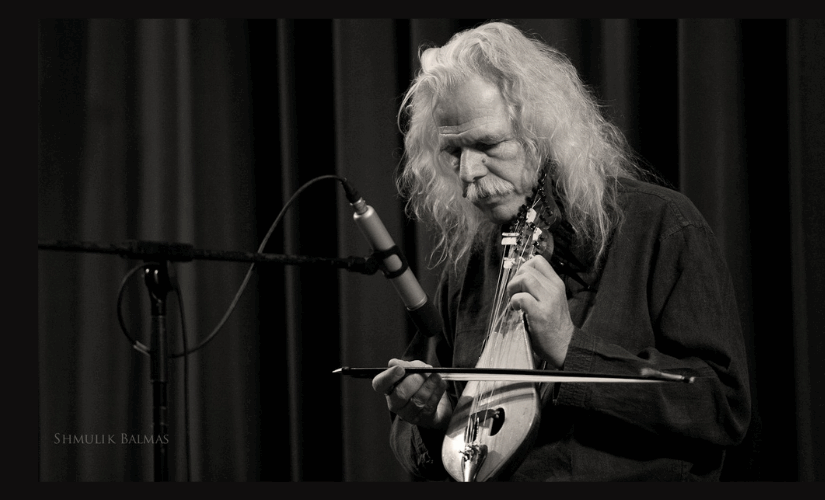
ROSS DALY
Long before the emergence of what we call “world music,” some individuals had already recognized the immense value and diversity of the world’s musical traditions and dedicated their lives to their study. One of these individuals is Ross Daly.
Although of Irish origin, Ross Daly does not fit into any particular ethnic stereotype, as his life has unfolded in many parts of the world and he has lived for over 35 years on the island of Crete, Greece. Early on, he discovered that music was, in his own words, “the language of my dialogue with what I perceive as sacred.”
This dialogue led him to the great modal traditions of the Middle East, Central Asia, and the Indian subcontinent, where he finally encountered the musical archetypes he had sought throughout his life. In these traditions, he encountered music that was not merely a vehicle for personal expression, but something capable of taking one beyond the usual boundaries of the self into other realms of transpersonal experience.
This discovery transformed Ross Daly’s life, and he abandoned all other activities to devote himself to studying the deepest secrets of these musical traditions and the art of composition. He traveled extensively, studying with leading masters of modal traditions worldwide. Since 1975, he has been based on the island of Crete, where he is widely recognized as one of the foremost experts on the island’s rich musical tradition.
He is also particularly known and respected for his ability to bring together artists from different and seemingly unrelated traditions into collaborations of unique quality and depth. In 1982, he founded the Labyrinth Musical Workshop, now located in the village of Houdetsi, 20 km south of Heraklion.
After many years of intensive training in various musical traditions, Ross Daly turned to composition, drawing on all the knowledge he acquired during his long apprenticeships. Today, he has released more than thirty-eight albums of his own compositions as well as arrangements of traditional melodies collected during his travels. The island of Crete remains a base for his personal and musical research, while he continues to travel worldwide to present his music.
Ross Daly has performed in many prestigious venues and festivals such as Carnegie Hall (2015), Migration Festival in Taipei (2006), International Lute Festival in Tetouan (2006), Madrid Summer Festival (2006), International Festival in Warsaw (2006), Manresa Festival in Barcelona (2006), Athens Concert Hall (1993, 2006), and the National Concert Hall in Dublin, among many others.
In the summer of 2004, he served as artistic director of the cultural program for the Olympic Games host city of Heraklion, Crete, titled “Crete, Music Crossroads.” He organized and supervised 15 concerts featuring 300 musicians from around the world, including internationally renowned artists such as Jordi Savall, Eduardo Niebla, Huun-Huur-Tu, Habil Aliev, Dhoad Gypsies of Rajasthan, Mohammad Rahim Khushnawaz, Trio Chemirani, Adel Salameh, and many others. Today, Ross Daly continues to travel and perform in Greece and abroad, while directing the Labyrinth Musical Workshop in Houdetsi.