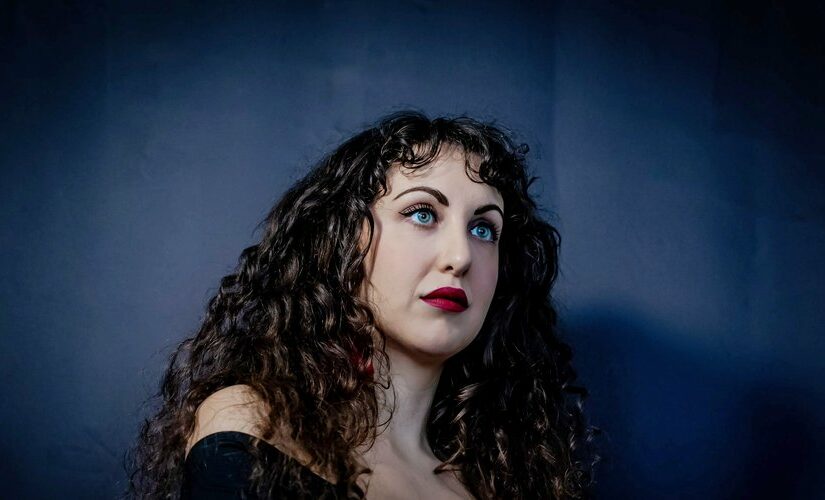
Songs from the Sephardic Judeo-Spanish tradition
and an approach to associated repertoireS*
1 – 10 MARCH 2026
THESSALONIKI (GREECE)
In partnership with the University of Macedonia
& the French Institute of Thessaloniki
With: Sokratis SINOPOULOS, Nikos TZANNIS-GINNERUP, Anastasia TSAKIRIDOU, Dimitris MYSTAKIDIS, Antonis ARTSALIS-GINNERUP, and Maria ZOPOUNIDIS
* The educational content is currently being created and will be available soon.
*Pending confirmation
CONTEXT
Unlike other musical traditions, Judeo-Spanish songs do not constitute a homogeneous stylistic whole. This diversity, which is due to their history, the many geographical areas in which they have developed and the many influences that run through them, leaves performers with a great deal of freedom, but this freedom must be part of a coherent framework that is faithful to the spirit that inspires them.
ERASMUS+ ELIGIBILITY CRITERIA
To participate in this training program and benefit from Erasmus+ funding, you must meet one of the following criteria:
– Be registered as a job seeker,
– Be officially recognized as a person with a disability,
– Be receiving minimum social benefits.
Each situation is unique, and we take into account individual profiles according to the required criteria.
For any further information, please contact us: contact@iimm.fr
OBJECTIVES
To become familiar with the poetic and musical world of Judeo-Spanish songs in all their diversity, integrating the historical, sociological and geographical context in which they are set.
Get to grips with the different branches of the repertoire and their specific features: from romances originating in medieval Spain to the kantigas born in Salonika or Istanbul in the 20th century, from secular love songs to coplas set to the rhythm of religious festivals.
Respect the modal constraints – and freedoms – of the repertoire (except for the songs, often more recent, that belong to the tonal universe): continuity and differences between the musical modes of medieval Spain, Arabo-Andalusian modes, Oriental and/or Ottoman modes.
TEACHING APPROACH
Maria Zopounidis will teach various songs during the masterclass. This work will alternate between collective learning and individual interpretation.
Time will be devoted to listening and comparative analysis of the songs and their various possible interpretations according to geographical area and period (from the first decades of the 20th century to the present day…).
As the workshop is essentially oral, no knowledge of music reading is required. However, scores corresponding to the songs studied will be distributed as far as possible.
The masterclass may end with a presentation by the participants of the work done during the week, including the main songs studied.
CONTENTS
- Body preparation: relaxing the body and becoming aware of any blockages, anchoring and fluidity of movement.
- Listening, availability, interiorisation and concentration, presence to oneself and to the audience.
- Warming up and vocal work: flexibility and agility, ornamentation and melismas, according to the songs being sung and respecting the modes.
- Learning and performing a number of Judeo-Spanish songs from the different branches of the repertoire: romances from the Spanish medieval tradition, kantigas. Coplas.
- Songs from the Salonican tradition (and more broadly from the eastern Mediterranean): similarities and differences with songs from the western tradition, mainly from northern Morocco.
- The possibilities of interpretation, accompaniment and the art of ornamentation according to geographical area, period and choice of performer.
- Contemporary interpretations: following trends and the ‘zeitgeist’, and/or opening up to one’s own singularity: finding one’s way/voice while respecting the specificities of the repertoire.
- Thematic constants encountered in the repertoire: for example, ‘border songs’ and la hermana cautiva, or themes with a double meaning (avre la tu ventana, ou la tu puerta cerrada”). Thematic continuity or rupture between the Western and Eastern Mediterranean.
- Possible approach to associated repertoires: liturgical Sephardic chant, Arabo-Andalusian chant, etc.
- Work on the language: prosody, the specific pronunciation(s) of Judeo-Spanish in relation to Castilian, the words you wish to emphasise according to their meaning and the emotion you wish to convey.
- Rhythmic approach to accompaniment with digital percussion: singing to accompaniment.
CONDITIONS OF PARTICIPATION
- Good singing experience and an interest in the diverse repertoire (no theoretical knowledge necessary).
- Even a superficial knowledge of Spanish and/or Judeo-Spanish will facilitate the work and learning of the songs.
- Open to amateurs and professionals, score readers and non-readers alike.
- Instrumentalists are also welcome, if they wish to accompany themselves and/or perform the instrumental interludes of the songs covered.
- If possible, bring a percussion instrument (frame drum such as bendir, daf, tambourine).
REGISTER NOW
>> ONLINE REGISTRATION <<
>> FEES AND REGISTRATION DETAILS <<
SCHEDULE:
10:00 AM – 1:00 PM & 2:00 PM – 4:00 PM
BIOGRAPHY
MARIA ZOPOUNIDIS
Maria Zopounidis grew up in Greece, immersed from an early age in a dual musical heritage: her Pontic Greek father passed down traditional songs from Greece, Asia Minor, and the Black Sea, where their roots lie; her Franco-Italian mother, a pianist, taught her piano and provided her with a classical musical education.
She moved to France to pursue her musical studies and, in 2018, obtained a Diploma of Musical Studies in lyrical singing from the Regional Conservatory of Avignon (CRR). She furthered her training at the Institut Supérieur des Arts of Toulouse, where she earned, in 2022, the National Higher Professional Musician’s Diploma in lyrical singing under the guidance of Sophie Koch and Didier Laclau-Barrère. She also earned a Bachelor’s degree in Musicology from the University of Toulouse Jean Jaurès and the State Diploma in lyrical singing. In 2021, she received the “Espoir” Prize from the Maurice Ravel International Academy in Saint-Jean-de-Luz, and in 2022, she began her professional singing career with the National Choir of the Capitole of Toulouse. In both 2023 and 2025, Maria performed the role of Susanna in Mozart’s The Marriage of Figaro at the Nuits Musicales en Armagnac festival.
Her passion for orally transmitted ancient songs led her, in 2022, to enroll in the Sacred and Secular Songs of the Sephardic and Al-Andalus Traditions program with Françoise Atlan at the International Institute of World Music in Aubagne, where she obtained her Diploma of Musical Studies in November 2023. Since then, she has been assisting Sandra Bessis in teaching the Sephardic Judeo-Spanish Song Tradition and Associated Repertoires program at the same institute. She has also been teaching Modern Greek there since 2022 as part of the Songs of Greece and Asia Minor course led by Maria Simoglou. Additionally, Maria completed a Master’s degree in Musicology at the University of Toulouse Jean Jaurès and presented her work under the supervision of Florence Mouchet, lecturer in medieval musicology, at the conference Modal Music of Yesterday and Today, held in April 2023 at the Abbey of Sylvanès.
Since June 2023, Maria has collaborated with various artists from the world music scene, including Iranian multi-instrumentalist Soroush Kamalian and guitarist and artistic director of Compagnie Rassegna, Bruno Allary.
NIKOS TZANNIS-GINNERUP
Born on June 21, 1959, in Athens, Greece, he grew up developing a strong connection to both architecture and music, two disciplines that would shape his professional and artistic journey.
He completed his secondary education in 1977 at the Moraitis School – Athens Model Lyceum. He then pursued higher studies in architecture and graduated in 1988 from the Royal Danish Academy of Fine Arts – School of Architecture (Det Kongelige Danske Kunstakademi – Kunstakademiets Arkitektskole) in Copenhagen, Denmark.
Alongside his academic studies, he cultivated an intensive musical education. In 1976, in Athens, he studied the Cretan lyra under the guidance of Manolis Perrakis (then 83 years old) while simultaneously studying the Cretan lute. In 1978, in Copenhagen, he studied the saz with Yüksel Isik, performing in Cretan music concerts with Kyriakos Kladakis and collaborating in Turkish folk music performances.
Between 1988 and 1993, in Istanbul, Turkey, he received private instruction in Istanbul lyra (classical kemençe) and tanbur from the master İhsan Özgen, deepening his knowledge of Ottoman classical and Eastern Mediterranean musical traditions.
His artistic career includes numerous significant collaborations. From 1992 to 1996, he collaborated with the cultural venue “MYLOS” in Thessaloniki. From 1994 to 2000, he was co-founder and member of the ensemble “Kirmizi Gül,” alongside Kyriakos Tapakis, Baris Bal, Irini Kritharidou, and Loukas Metaxas.
Between 1995 and 2001, he collaborated with Drosos Koutsokostas, Markos Skoulios, Giorgos Mavrommatis, Paschalis Arvanitidis, Lefteris Pavlou, and Giorgos Psaltis, presenting works by Selanikli Ahmet Efendi (Thessaloniki 1870 – Istanbul 1928).
He also participated in the project “EL LA MAR AY UNA TORRE,” dedicated to the Sephardic songs of Thessaloniki, in collaboration with David Saltiel and other musicians. Notable concerts included Haifa (July 25, 1996), the Vienna Radio Concert Hall (November 27, 1999), and Munich (November 19, 2000).
In 2001, he took part in the colloquium at Fondation Royaumont titled “Un siècle de musique: L’identité de la musique sépharade à la lumière de la discographie du 20ème siècle.”
In 2003, he co-founded the ensemble “Perndelides” with Ilias Andreoulakis, Thymios Atzakas, Christos Barbas, Matina Mastora, and Loukas Metaxas, performing at venues such as “Sarai,” “Amareion,” and “Cafe Ellinikon.”
He is also associated with the project “The Pear-shaped Lyras Meet” (Oi Achladoschimes Lyres Synantiountai) and participated in Festival Mate Thessaloniki 2023.
An architect by training and a devoted musician, his career reflects a continuous dialogue between architectural thought and the musical traditions of Crete, the Eastern Mediterranean, and the Ottoman world.
The Greek musician is a contemporary master of the lyra, a bowed instrument whose origins date back to the Byzantine era. His playing is delicate and nuanced, yet deeply expressive, and his command of the instrument is widely acclaimed. Sinopoulos has collaborated with numerous musicians around the world. He moves effortlessly between genres, ranging from jazz and classical music to the folk traditions of Greece and the Eastern Mediterranean.
Born in Athens in 1974, he studied Byzantine music and classical guitar from an early age, and began playing the lyra in 1988 under the guidance of Ross Daly. His remarkable talent became immediately apparent, and he joined Daly’s group Labyrinthos a year later. He proved particularly prolific, participating in recordings with countless musicians worldwide. In 1999, he received the Melina Mercouri Award for young artists.
In 2010, he founded the Sokratis Sinopoulos Quartet with pianist Yann Keerim, double bassist Dimitris Tsekouras, and drummer Dimitris Emmanouil. The quartet’s first album, Eight Winds, produced by Manfred Eicher for the ECM Records label, received outstanding international reviews. Sokratis Sinopoulos is Assistant Professor in the Department of Music Science and Art at the University of Macedonia in Thessaloniki, Greece.
DIMITRIS MYSTAKIDIS
Dimitris Mystakidis is a Greek folk guitar virtuoso who, for the past 20 years, has pursued a personal quest exploring the roots and branches of rebetiko. A multi-instrumentalist, Mystakidis has collaborated with many Greek artists, including composers, musicians, and singers, with his most enduring collaborations being with composer and performer Nikos Papos and his group “Loxi Falagga” (Oblique Phalanx), as well as composer, songwriter, and performer Thanasis Papakonstantinou.
Mystakidis is Professor in the Department of Music Studies at the University of Ioannina. He has published two books, one for the mainland Greek lute (Steryianó Laoúto) and another for the Greek folk guitar (Laikí Laoúto).
He has performed at world music festivals and venues throughout Europe. In December 2006, he released his first solo album, 16 Rembetika Tragoudia me Kithara (“16 Rembetika Songs for Guitar”), in which, for the first time in Greek music history, rebetiko songs were arranged exclusively for folk guitar. This work had such an impact that many rebetiko groups today follow in Mystakidis’ footsteps. World Music Network (UK) featured this album and included it as a bonus CD in The Rough Guide to Greek Café, while Introducing released the album digitally in 2012.
Mystakidis’ passion for approaching the rebetiko repertoire in all its depth led him to release, with Evgenios Voulgaris, Apostolos Tsardakas, and Theodora Athanasiou, a second album, Apsilies (2009), featuring pre-war and Smyrna (Izmir) era rebetiko songs. His third album, Psithirizontas to Rembetiko (“Whispering Rembetiko”), released with Evgenios Voulgaris in 2013, includes rebetiko songs arranged for folk guitar and yayli tambur.
His next album, Esperanto, his second solo recording, was released in November 2015. It features sixteen songs from the post-war repertoire, exclusively arranged and performed on guitar, with the participation of some of the greatest Greek singers.
His latest album, Amerika, was released in April 2017. It includes songs written by Greek immigrants in America more than a century ago. In this album, Mystakidis revives the forgotten “tsibiti” guitar style of these musicians, a technique clearly influenced by the fingerpicking style of African American blues musicians.
NATASA TSAKIRIDOU
Natasa Tsakiridou was born in 1990 in Thessaloniki, Greece. She studied Greek traditional singing with Georgia Tenta at the Department of Music Science and Art of the University of Macedonia, and Medical Laboratory Technology at the ATEI of Thessaloniki. She also studied Turkish traditional singing and kaval at the State Conservatory of Turkish Music of Ege University in Izmir, Turkey (Erasmus+ program).
She was a member of the Vocal Art and Research Laboratory led by Spyros Sakkas. She is a founding member of the groups Leftokaria (Pontic music), Dilgeroudi (Thracian music), and Tanzimat Project (kafé aman and music of Anatolia). She conducts workshops and seminars on traditional singing and music-and-body education.
She has collaborated with institutions such as Onassis Stegi, the Thessaloniki Concert Hall, Orgelpark, and the Gaudeamus Festival (Netherlands).
She teaches the courses Traditional Singing and Traditional Music Vocal Ensemble within the specialization of Greek Traditional Music (folk music).
MARIA ZOPOUNIDIS
Maria Zopounidis grew up in Greece, immersed from childhood in a dual musical culture: her Pontic Greek father passed on to her the traditional songs of Greece, Asia Minor, and the Black Sea region from which they originate; her Franco-Italian pianist mother taught her piano and gave her a classical musical education.
She moved to France to pursue her musical research and, in 2018, obtained the Diplôme d’Études Musicales in classical singing at the CRR of Avignon. She furthered her studies at the Institut Supérieur des Arts de Toulouse, where in 2022 she earned the Diplôme National Supérieur Professionnel de Musicien in classical singing in the class of Sophie Koch and Didier Laclau-Barrère. She also obtained a Bachelor’s degree in Musicology from the University of Toulouse Jean Jaurès and the State Diploma in classical singing. In 2021, she won the Espoir Prize of the Maurice Ravel International Academy in Saint-Jean-de-Luz, and in 2022 she began her professional singing career with the National Choir of the Capitole de Toulouse. In 2023 and 2025, Maria performed the role of Susanna in The Marriage of Figaro by Mozart at the Nuits Musicales en Armagnac festival.
Her love for orally transmitted ancient song led her, in 2022, to follow the Sacred and Secular Songs of Sephardic and Al-Andalus Traditions program with Françoise Atlan at the International Institute of World Music in Aubagne, where she obtained her Diplôme d’Études Musicales in November 2023. Since then, she has been teaching as an assistant to Sandra Bessis in the Sephardic Judeo-Spanish Tradition Singing program and associated repertoires at the International Institute of World Music in Aubagne. Since 2022, she has also taught Modern Greek in the Songs of Greece and Asia Minor program directed by Maria Simoglou. Maria also completed a Master’s degree in Musicology at Toulouse Jean Jaurès University and presented her research under Florence Mouchet, Associate Professor of Medieval Musicology, at the conference Modal Music Today and Yesterday, organized in April 2023 at Sylvanès Abbey. Since June 2023, Maria has collaborated with various world music artists, including Iranian multi-instrumentalist Soroush Kamalian and guitarist and artistic director Bruno Allary of Compagnie Rassegna.
ANTONIS PARTSALIS-GINNERUP
Antonis Partsalis-Ginnerup was born in Athens in 2005 and grew up in Thessaloniki
within a musical family environment. From a young age, he developed an interest in music
and began learning various instruments, initially in an experiential manner—much like
traditional musicians—through observation, imitation, and subsequent active participation.
In parallel, he attended lessons with teachers such as Chrysostomos Vletsis and Iakovos
Moysiadis on the Constantinople lute (lavta), Dimitris Sgouros on the Cretan lyra, and
Antonis Fragiadakis, Giorgos Xylouris, and Dimitris Sideris on the Cretan lute.
He has come into contact with various musical genres, including Sephardic songs, by
attending musical activities. In some of these, he participated on the Constantinople lute
alongside David Saltiel (1931-2022). He also studied Byzantine chanting and singing at the
“Romanos o Melodos” association under teacher Chrysostomos Vletsis. In recent years, he
has also been active with the electric and acoustic guitar.
Since 2025, he has been a student at the Department of Music Science and Art of the
University of Macedonia in Thessaloniki, specializing in the Constantinople lute under
Professor Sokratis Sinopoulos.
MARIA SIMOGLOU
A polymorphous singer, multi-instrumentalist, composer and songwriter, Maria Simoglou has been active on the international music and theatre scene for over 20 years.
Born in Thessaloniki, northern Greece, she was fortunate to grow up with a double musical culture, both learned and popular. Her musical roots are steeped in traditional music from Macedonia, Thrace, and Asia Minor, while her academic journey led her through the Music High School of Thessaloniki, the State Conservatory of Thessaloniki (where she studied oboe, oud, qanun, and percussion), and the Hanns Eisler Academy of Music in Berlin, in the vocal/theatre department under Marion Lukowsky and Prof. Magdalena Hajossyova. She also took part in vocal workshops with Prof. Barbara Schlick, Prof. Norma Sharp, Thomas Quasthoff, René Jacobs, Spyros Sakkas, among others.
From an early stage, she collaborated with numerous ensembles and orchestras in Greece and abroad, working across traditional, classical, and contemporary music. She is regularly invited to perform in concerts, festivals, and music seminars, including those focusing on film and theatre music.
Her appearances include the Festival d’Avignon, Babel Med Music, Villa Méditerranée, Forum Barcelona, Schwarz-Weiss Festival, Bayer Kultur, Berliner Märchentage, Deutsche Welle Konzerte, Montalbane (International Days of Medieval Music), Alte Musik Treff, Rebecca Horn’s Moon Mirror installation, DIMITRIA Ethno-Jazz Festival, Cité de la Musique Marseille, Mandopolis Festival, Les Suds à Arles, Vélo Théâtre, Abbaye de Sylvanès, Centre Pompidou, among many others.
She has also participated in numerous radio and TV broadcasts in Greece, Germany, Belgium, Switzerland, Luxembourg, the Netherlands, Spain, the UK, France, the USA, Australia, and more.
Maria has shared the stage and recordings with many renowned international artists, including Ross Daly, Spyros Sakkas, Stelios Petrakis, Efren Lopez, Maria Thoidou, Socratis Malamas, Bijan Chemirani, Patrick Vaillant, and Kevin Seddiki.
Since 2011, she has worked with the theatre company “Mises en Scène” on two productions: Bon Appétit and La parabole des papillons (directed by Michèle Addala, dramaturgy by Gilles Robic).
She has been living in Marseille, France, since 2008, where she leads and performs with various ensembles. She collaborates as a singer, musician, and actress in traditional and contemporary music, dance, and theatre productions.
Since 2008, she has regularly taught masterclasses (DROM, IIMM, FAMDT), focusing on vocal and body techniques, interpretation, ornamentation, rhythm, and improvisation specific to Greek and Asia Minor singing traditions.